


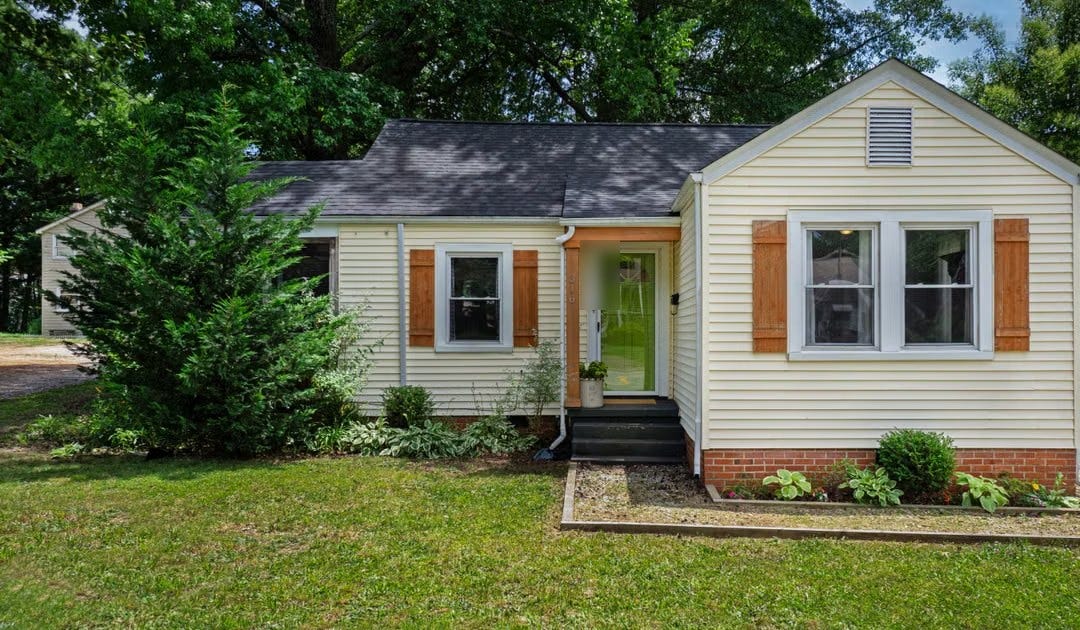
If you are the executor of a parent’s estate in Tyler, or the attorney advising one, the first question about the house is usually whether the probate court has to approve the sale. Under independent administration in Texas, it does not. Under a dependent, court-supervised administration, it usually does: unless the will gives the executor a power of sale, the court acts twice, once to order the sale and again to approve the contract. Which kind of administration the estate has decides how the sale runs, how long it takes, and what the buyer will ask to see at closing.
Two kinds of administration under one Estates Code
Texas probate runs under the Estates Code. An executor or administrator serves either under the court’s supervision or independently of it, and which one is set when the administration is created.
Section 402.001 says that once independent administration is created, the order appointing the independent executor is entered, and the inventory (or an affidavit in lieu of it) is filed, “further action of any nature may not be had in the probate court except where this title specifically and explicitly provides for some action in the court.” Section 402.002 puts the practical result in one sentence: any action a supervised representative may take with or without a court order “may be taken by an independent executor without a court order.”

How independent administration in Texas gets created
Chapter 401 gives three paths, and one way to shut them all.
The will asks for it. Section 401.001(a) lets a testator provide that nothing more happens in probate court than probating and recording the will and returning the inventory, appraisement and list of claims.
The heirs agree to it. If the will names an executor but says nothing about independent administration, Section 401.002 lets all of the distributees agree to it, and the court “shall enter an order granting independent administration” unless it finds that would not be in the estate’s best interest. Section 401.003 allows the same when the person died without a will, with one condition in subsection (b): the court may not appoint an independent administrator until a heirship proceeding under Chapter 202 has determined that the people asking are all of the heirs.
The will forbids it. Section 401.001(b) lets a testator say no independent administration may be allowed. Then the estate is settled under the court’s direction.
The agreement paths need all of the distributees. If one distributee will not sign, the estate cannot get independent administration by agreement.
When an independent executor can sell without a court order
Section 402.052 is the operative rule. Unless the will limits it, an independent executor (in addition to any power of sale the will gives) and an independent administrator “have the same power of sale for the same purposes as a personal representative has in a supervised administration, but without the requirement of court approval. The procedural requirements applicable to a supervised administration do not apply.”
So an independent executor can sign a contract on the decedent’s house, close, and sign the deed without an application, a citation, a hearing or a confirmation order.
What it does not change is the executor’s duty to the family. Section 402.053(c) says the power of sale does not relieve the executor “from any duty owed to a devisee or heir in relation, directly or indirectly, to the sale.” An independent executor who sells cheaply to a friend still owes the heirs that duty, even though no judge approved the sale.
What a dependent administration has to do first
In a supervised estate the default flips. Section 356.001(a) of Chapter 356: “estate property may not be sold without a court order authorizing the sale.” The exception is Section 356.002: if the will itself authorizes the executor to sell, no order of sale is required.
Without that will language, the sequence is:
A written application for an order of sale, with an exhibit verified by affidavit showing the estate’s condition and its claims (Section 356.252). The sale has to be necessary or advisable to pay expenses and claims, or to dispose of real property in the estate’s best interest (Section 356.251).
Citation to everyone interested in the estate, served by posting, with a window to file an opposition (Sections 356.253 and 356.254). An opposition forces a hearing (Section 356.255).
An order of sale stating the property, whether the sale is public or private, its purpose, the bond findings and the terms (Section 356.256).
The contract, then a sworn report of sale filed no later than the 30th day after the property goes under contract (Section 356.551).
After five days from the report, the court inquires into the sale, hears evidence and checks the bond (Section 356.552). If it is satisfied the price is fair and the sale proper, it signs an order approving the sale and authorizing the conveyance (Section 356.556).
A deed that refers to and identifies the order approving the sale (Section 356.557).
Each step adds a filing and a wait, and the buyer has to stay under contract while the report and the approval go through.
How a buyer can rely on the independent executor’s authority
With no order of sale, the buyer’s question is how to know this person can sell. Section 402.053(a) answers it. A buyer who is not an heir or devisee and deals in good faith “is not required to inquire into the power of sale” if one of three things is true:
the will grants the executor a power of sale;
the court order appointing the executor grants one under Section 401.006, which lets the distributees consent to a power of sale when there is no will or the will’s language is not enough; or
the executor signs a sworn affidavit, “recorded in the deed records of the county where the property is located,” that the sale is necessary or advisable to pay expenses, allowances or claims under Section 356.251(1).
Subsection (b) makes that affidavit conclusive proof of authority between the buyer and the heirs, and says the signature or joinder of an heir “is not necessary for the purchaser to obtain all right, title, and interest of the estate in the property being sold.”
Two different counties can be in play. The probate case is filed where the decedent was domiciled (Section 33.001), but the affidavit goes in the deed records of the county where the house sits. For a Tyler house, that is Smith County, even if the estate is being probated somewhere else.
The papers to have ready before closing
Letters testamentary or of administration are a clerk’s certificate under the court’s seal stating that the representative qualified, the date of qualification and the decedent’s name (Section 306.005). Section 306.007 makes them “sufficient evidence” of the appointment and qualification, and under Section 306.006 the clerk issues as many as the holder requests. Order more than one.
In an independent administration, the statutes above point to this set:
certified letters testamentary or of administration;
the order admitting the will and granting independent administration;
the will, if it contains a power of sale, or the Section 401.006 order if the distributees consented to one;
if neither exists, the Section 402.053(a)(3) affidavit, recorded in the county where the house is;
proof that the inventory, appraisement and list of claims was filed and approved, or that an affidavit in lieu of it was filed, because Section 402.001 ties the executor’s independence to that filing.
On timing, Section 309.051 makes the inventory due before the 91st day after the representative qualifies, unless the court extends it. Section 309.056 lets an independent executor file an affidavit in lieu of the inventory when the only unpaid debts are secured debts, taxes and administration expenses.
In a dependent administration the set is shorter but slower to assemble: the letters, the order of sale, and the order approving the sale, which the deed has to identify.
An independent executor with a clear power of sale can accept an offer and close on the estate’s schedule. A dependent administrator can sell to a cash buyer too, but the judge still has to find the price fair under Section 356.556, so the offer has to hold up in front of the court.
If the estate’s house is in East Texas and you want a second number to set beside a listing, this page explains how we buy houses in Tyler from executors and heirs. For an estate elsewhere in Texas, the team at House Buyers Texas can look at the letters and orders you already have and tell you whether they are enough to close.
I work with House Buyers Texas. This is general information about the Texas Estates Code, not legal advice; talk to a probate attorney about your estate.