


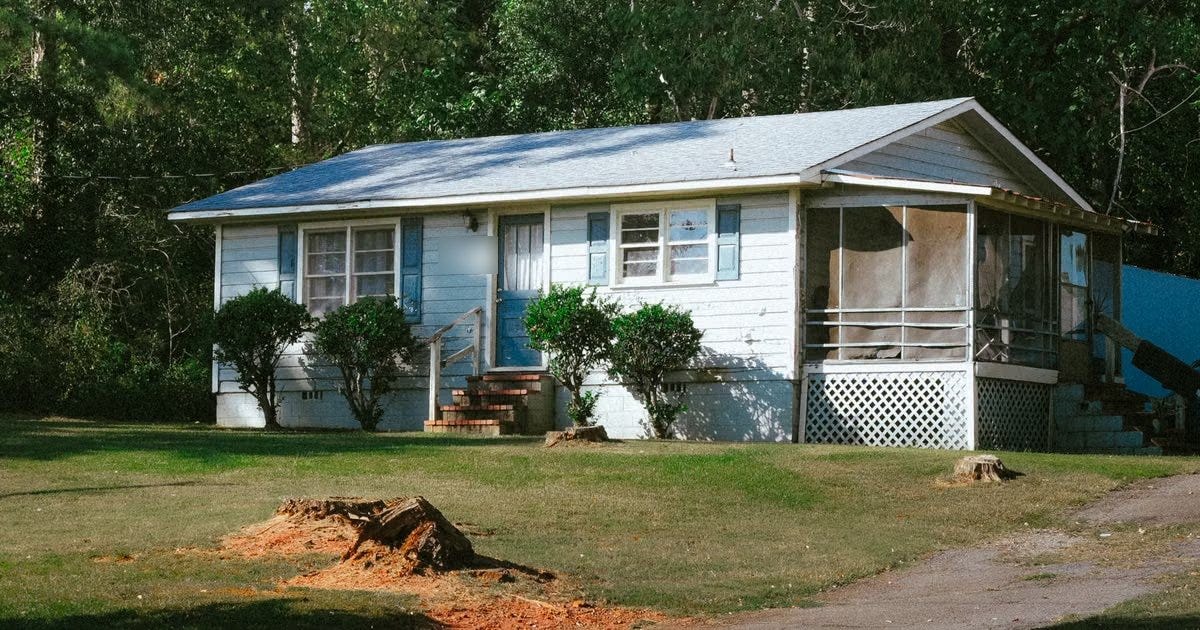
A partition lawsuit in Texas is how one co-owner of a house makes a court decide what happens to it when the other owners will not agree. It usually comes up between siblings who inherited a parent’s house, or between former spouses who are both still on the deed. If you advise one of them, know this first: when the owners are family, Texas law puts a valuation and a buyout ahead of any forced sale. That changes the negotiation.
What a partition lawsuit in Texas actually asks for
Texas Property Code Section 23.001 says a joint owner of real property “may compel a partition of the interest or the property among the joint owners or claimants under this chapter and the Texas Rules of Civil Procedure.”
“Compel” is the key word. Nobody can be forced to stay a co-owner, so the suit is not about whether the property gets divided but how. Partition in kind splits the land into separate parcels. Partition by sale sells the whole property and splits the money. A house on a city lot cannot practically be split, so most residential cases come down to whether there will be a sale, and on whose terms.

Under Section 23.002(a), the suit belongs in “a district court of a county in which any part of the property is located.” For a house in San Antonio, that is usually a Bexar County district court, wherever the co-owners live.
The court can appoint commissioners to carry out the division. Section 23.005 has the judge award them, and any surveyor, “a reasonable fee,” which “shall be taxed and collected as costs of court.” The owners pay for the process that divides their property.
When an inherited house is “heirs’ property”
In 2017 the Legislature added Chapter 23A, the Uniform Partition of Heirs’ Property Act (Senate Bill 499, effective September 1, 2017). Under Section 23A.002(5), property is “heirs’ property” when it is held in tenancy in common and, when the suit is filed:
no recorded agreement binds all the co-owners on how to partition it;
at least one co-owner got title from a relative, living or dead; and
relatives hold at least 20 percent of the interests, or one person who inherited from a relative does, or at least 20 percent of the co-owners are relatives.
Three siblings who inherited their mother’s house without a will usually meet that test. Section 23A.003(a) requires the judge to decide the question in every partition of real property. If the answer is yes, the property “must be partitioned under this chapter unless all of the cotenants otherwise agree in a record.”
Divorce is different. While a divorce is pending, Family Code Section 7.001 has the divorce court divide the estate “in a manner that the court deems just and right.” Partition comes later, when a decree leaves both former spouses on the deed. Whether Chapter 23A covers that house is for the judge to decide on the facts.
The court-priced buyout under Chapter 23A
First the court sets a value. Section 23A.006 calls for an appraisal by “a disinterested real estate appraiser” unless every co-owner agrees on a value. The parties have 30 days after notice to object, and then the court holds a hearing and fixes the value.
Then, under Section 23A.007, if any co-owner asked for a sale, the co-owners who did not ask can buy out the ones who did. They have 45 days after the court’s notice to elect. The price is a formula: the court’s value of the whole property times the seller’s fractional share. The court then sets a payment date no earlier than 60 days after its notice.
So the sibling who sues to force a sale does not choose the buyer or the price. The sibling who wants to keep the house gets a fixed price and a deadline, at the same number a negotiated buyout could have reached without a lawsuit.
If nobody buys out the seller
If the buyout does not take everyone out, Section 23A.008 tells the court to order partition in kind unless that causes “substantial prejudice to the cotenants as a group.” Section 23A.009 lists what the judge must weigh. The list includes whether the property can practically be divided and whether the pieces would be worth materially less than the whole. It also covers how long the family has owned it, any sentimental attachment, how a co-owner is using it, and who has paid the taxes, insurance and upkeep. No single factor decides it, so a co-owner who has paid the taxes alone should get that on the record.
If the court orders a sale, Section 23A.010 requires “an open-market sale” unless sealed bids or an auction would bring more. If the co-owners cannot agree on a broker within 10 days, the court appoints one and sets the commission, and the house cannot be offered below the court’s value.
Add up only the minimum waiting periods in Sections 23A.006 and 23A.007: 30 days to object to the appraisal, 45 days to elect a buyout, and a payment date at least 60 days out. That is 135 days of statutory waiting after the appraisal notice, before any sale is ordered or the house is listed. Each period is a minimum, not an estimate.
The costs keep running the whole time: a court-ordered appraisal, commissioners’ and surveyor’s fees taxed as court costs, a court-set broker commission, and each owner’s own lawyer. The house often sits empty, and somebody still has to pay the taxes and insurance and keep it secured.
Settling it before the court does
Every step the court would take can be done by agreement instead. Chapter 23A itself lets the co-owners agree on a value, and lets all of them agree in a record to go a different way. A good settlement follows the statute’s own order:
Agree on a value. One shared appraisal, or a written method, which is what Section 23A.006(b) allows anyway.
Offer the buyout at value times share, the statutory formula.
If nobody will buy, sell together, with the closing costs and any credit for the owner who carried the taxes settled in writing first.
Step three is where an agent or attorney earns trust. An inherited or divorce house is often vacant, dated and in need of repairs nobody wants to pay for. Listing it means agreeing on repairs, showings and price cuts among people who agree on very little. An off-market sale to one buyer at an agreed price can close on a fixed date and pay everyone from one settlement statement. On a Bexar County file, find out what a San Antonio sale actually nets as-is before mediation, so the buyout figure has something real to be measured against. The same logic holds for spouses: selling a house in the middle of a divorce goes more smoothly when the decree or a written agreement spells out exactly how the sale happens.
What Chapter 23A does not change
Chapter 23A does not stop a partition. It changes the order of steps and the price. If nobody buys the seller out and the house cannot be divided, a sale is still the likely ending. The chapter does not apply to property that fails the definition, or where the co-owners already signed a recorded partition agreement. Nor does it answer the probate questions that come first, such as who the heirs are and whether title has passed to them.
Both statutes are short: Property Code Chapter 23 and the Uniform Partition of Heirs’ Property Act in Chapter 23A, both on the Legislature’s own site. Read Section 23A.007 before the first demand letter goes out.
This article explains Texas statutes for general information. It is not legal advice; a co-owner in a dispute should talk to a Texas attorney about their own facts. House Buyers Texas, which publishes this newsletter, buys houses for cash in Texas.